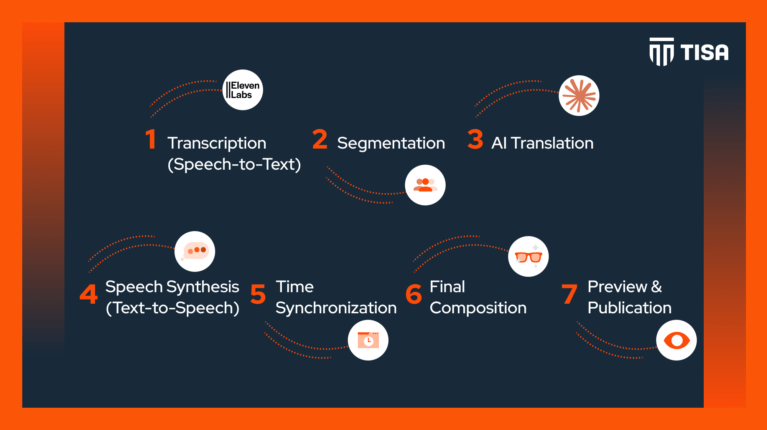
1. Transcription (Speech-to-Text)
The system processes the audio track containing the Polish commentary. Using AI, it converts speech into text, generating precise, word-level timestamps for total accuracy.
2. Segmentation
The transcribed text is automatically divided into logical segments, such as sentences or phrases. This process is based on both content and timing to ensure the original timeframes of each fragment are preserved.
3. AI Translation
Each segment is translated from Polish to English. The model is specifically prompted to respect the nuances of Polish football and ensure the language flows naturally for a global audience.
4. Speech Synthesis (Text-to-Speech)
The translated segments are converted into an English voiceover. The system ensures vocal consistency throughout the broadcast, adjusting delivery speed and analyzing surrounding context to create a cohesive performance.
5. Time Synchronization
Each generated audio clip is automatically fitted to its original time window. The system subtly adjusts the speech rate so that the English commentary perfectly aligns with the pace and energy of the original Polish broadcast.
6. Final Composition
Using AI, the system assembles the final MP4 file. This includes the original video, background ambiance, and separate, selectable audio tracks for both Polish and English commentary within a single file.
7. Preview & Publication
The operator previews the English track directly within the CMS. Once approved, the file is sent to the encoding and distribution system, ready for immediate broadcast on the OTT platform.
Key Features
- No Studio Required: Transition from a Polish broadcast to a full English version in just a matter of minutes.
- CMS Integration: Operators can manage the entire production flow without ever leaving their primary workspace.
- Dual Audio Tracks: Viewers have the flexibility to seamlessly toggle between commentary languages on the OTT platform.
- End-to-End AI: Every step – transcription, translation and synthesis – is powered by leading AI models.
Why We Built Our Own Dubbing System
While automated dubbing platforms work well for formats like podcasts, live sports comes with a different set of challenges. Commentary has to match the timing of key moments, preserve the emotional intensity of the original broadcast, and reflect the language and culture of the competition itself. Generic solutions often struggle with these nuances.
By developing our own dubbing workflow within Umpire CMS, we can maintain precise synchronization between commentary and on-pitch action, handle football-specific terminology and club identity with proper context, and keep the entire process embedded within the production workflow. The result is not just translated commentary, but a localized viewing experience created specifically for sports broadcasting.
Because everything happens inside Umpire CMS, operators can manage dubbing, review and publication in one place – without switching between tools or relying on fragmented external workflows. That means faster turnaround, greater consistency and a practical solution designed for real-world sports production.
Ready to See It in Action?
Interested in how automated commentary dubbing could help expand the reach of your sports content? Contact us to schedule a demo and see the solution in practice.