Why staying on YouTube has clear limitations
YouTube has reach—but not ownership. If you’re trying to build a sustainable media presence and commercialise your content, the platform doesn’t offer the flexibility you need.
Here are three core limitations:
-
You don’t own your fan data. You can’t track or retarget users beyond the platform.
-
Monetisation is limited. YouTube takes a cut and controls the ad formats. Sponsors are practically invisible.
-
You can’t customise the experience. There’s no room for branded contests, sponsor activations, or your own interactive features.
What a good transition actually looks like
The goal is not to “cut off” YouTube overnight. That would be counterproductive.
Instead, the most effective approach is a smart, phased migration. One that gradually changes user habits while maintaining discoverability and reach.
“Think in terms of habit change—not switch-off,” Tomasz advises.
Your fans are used to watching on YouTube. So keep using it—but use it strategically. Maintain a presence there for interviews, highlights, and teasers, while gently nudging users to your new platform for the main event: live matches, exclusive content, and enhanced features.
Step 1: Launch your platform fast—and with a clear purpose
With the right tech setup, launching your own OTT platform doesn’t have to take months. In fact, you can go live within 24 hours.
The key is to make your platform the exclusive home for live matches, while keeping VOD content (like highlights and behind-the-scenes videos) on YouTube.
This gives fans a compelling reason to visit—and keeps the transition low-friction.
At the same time, introduce features YouTube simply can’t offer:
-
AI-driven sponsor ads
-
Branded in-match graphics
-
Custom partner activations
- Gamification
-
Merchandise sales
“From day one, show that your platform does more than YouTube ever could,” says Tomasz.
Step 2: Move your fans—without losing them
No matter how sleek your platform is, fans won’t move just because you ask them to. You need to build digital bridges—consistent messages across channels that explain the value of the new experience.
-
Keep publishing VOD content on YouTube, but include strong calls to action in titles, descriptions, and video overlays.
-
Use newsletters, social media, and in-stadium promotion to tell fans why to switch—not just where to go.
-
Keep the initial experience friction-free: don’t force users to sign up right away.
“The transition works best when you remove barriers. Let fans explore first—then build loyalty,” Tomasz notes.
Step 3: Level up the experience and build loyalty
Once the basics are in place and fans begin using the new platform, the focus shifts to growth and engagement.
This is where owning the platform pays off.
-
Roll out mobile and Smart TV apps to increase accessibility.
-
Add registration perks like giveaways, interactive polls, or exclusive Q&As.
-
Start collecting first-party data: SSO, marketing consents, and email opt-ins.
You now have a growing database of engaged fans—and that’s pure value for your organisation and your commercial partners.
Use the platform to:
-
Sell merchandise and tickets
-
Offer premium match packages
-
Share data-driven results with sponsors
“This is where clubs start to see the upside. It’s not just about viewers—it’s about revenue, loyalty, and data you can actually use,” Tomasz explains.

What really matters in the migration
Your platform is your ecosystem. You control the design, the content, the monetisation, and the relationship with your audience.
Success isn’t about converting 100% of your YouTube viewers overnight. It’s about steady, healthy growth in users who engage more deeply with your club.
The biggest wins come to clubs that give fans a reason to return—not just for the match, but for the experience around it.
Three practical tips for a smooth transition
-
Do an evolution, not a revolution. Guide fans with strong communication and visible benefits.
-
Use YouTube as a funnel. Post teasers and highlights—but make it clear that the full experience lives elsewhere.
-
Make the value obvious. Offer rewards, interactivity, and a stronger connection with the club.
Closing thoughts
The future of sports content is direct-to-fan. That doesn’t mean abandoning YouTube—it means using it on your terms, to serve a broader strategy.
“You don’t need to lose fans or revenue to grow your platform. With the right strategy, you can gain both,” Tomasz concludes.
If you’re considering the move—or want to learn from clubs who’ve already done it—we’re happy to share more insights, tools, and examples. Let’s build something fans will come back to.
Curious how this works in practice?
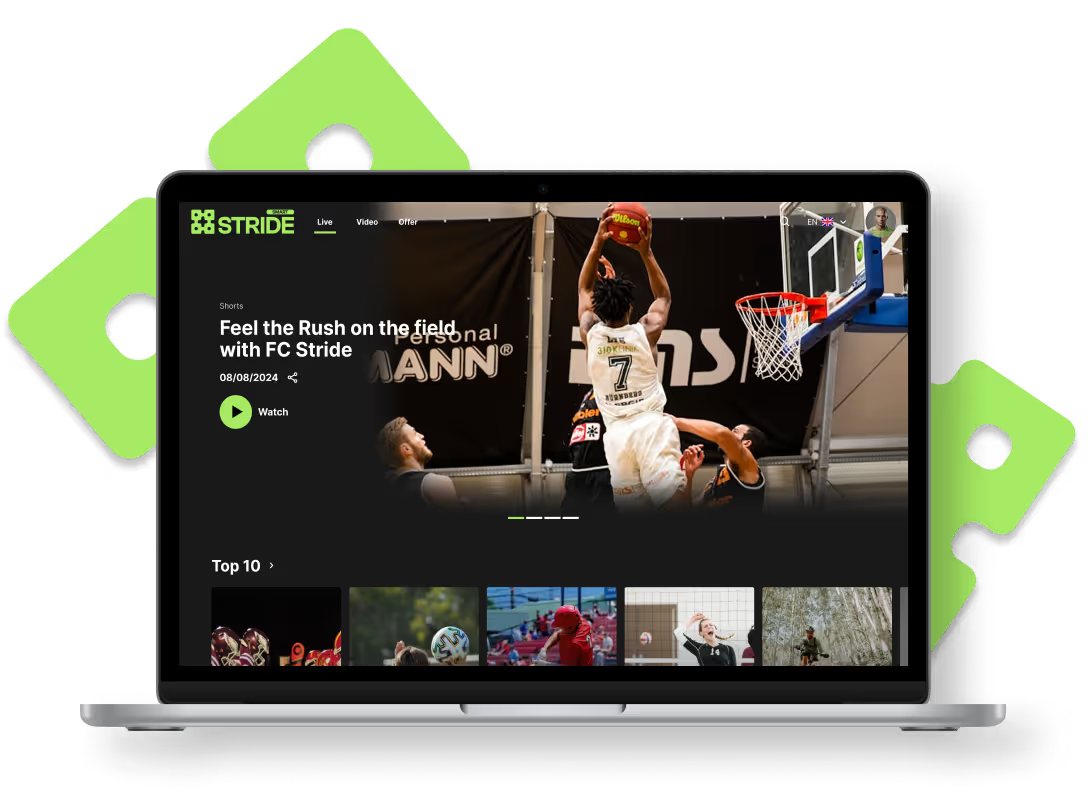
Our Smart STRIDE solution helps clubs and federations launch their own branded streaming platform quickly and cost-effectively—often in just 24 hours. It’s flexible, scalable, and built with fan experience in mind.
Visit https://www.smartstride.tv/ or reach out to our team to see how it could work for your organisation.